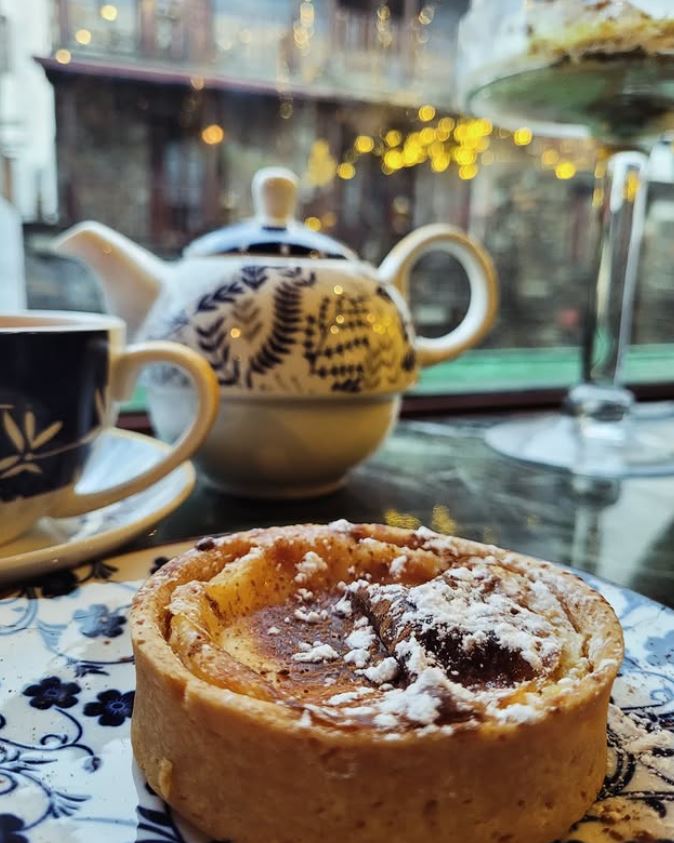

As you walk along Hatzichristou Street, just behind the Acropolis, you suddenly come across a small pastry shop. People from different countries, speaking different languages, wait patiently for one of the tiny tables to free up so they can sit down. Conversations drift from which dessert to choose to questions about joining Greek cooking classes at Let’s Cook Greece.
That was the atmosphere I found myself in as I waited—patiently—to speak with Ioanna Chatzioannou, the woman behind this success story. Watching her serve customers, I immediately sensed the warmth and genuine love she pours into her work. When we finally found a moment to talk, our conversation was interrupted more than once—and how could it not be, when customers just keep coming?

How did this place become such a success?
“The truth is, it only took us three years to reach this level of recognition,” Ioanna explains. “We opened during the pandemic, as we were gradually leaving Pelion, where we had been professionally active. From day one, our focus was respect for the customer and authentic, home-style recipes. We don’t use ready-made mixes—everything is fresh and handmade.”
“Today, we’re the top result on Google, with 1,600 five-star reviews. Google even sent auditors to see how it was possible to have such an overwhelming response. Thank God, people love us and choose us. Everyone tells us the shop is a phenomenon.”
What can one eat at Alchemist?
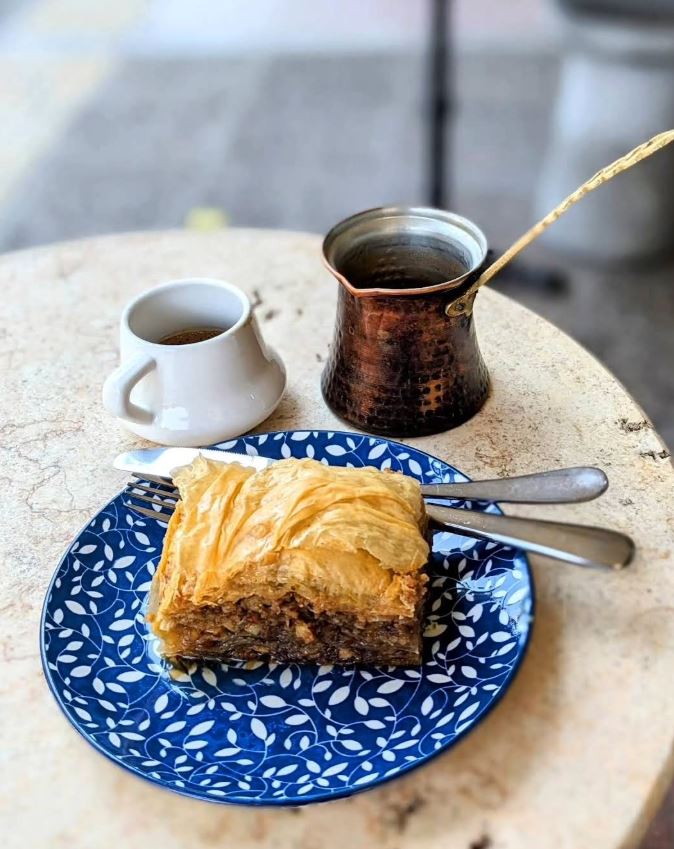
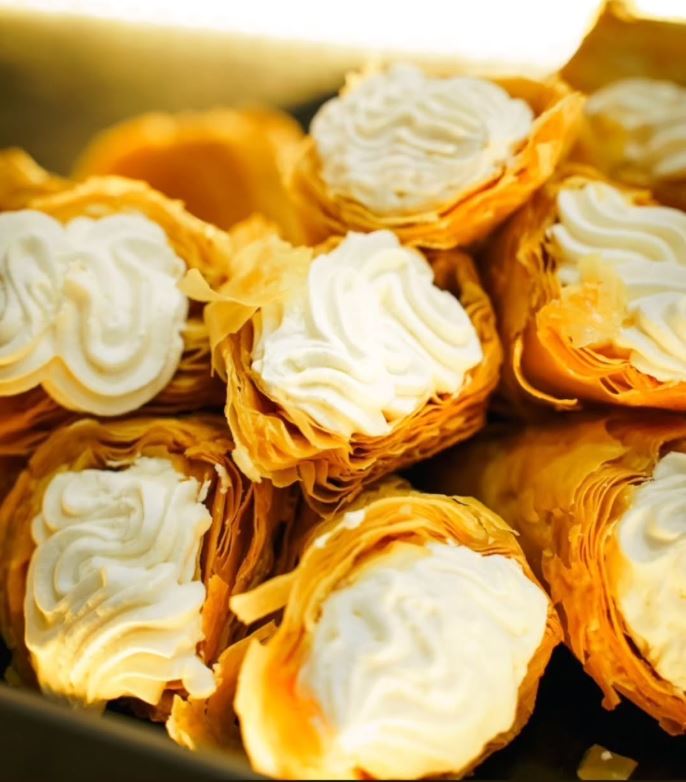
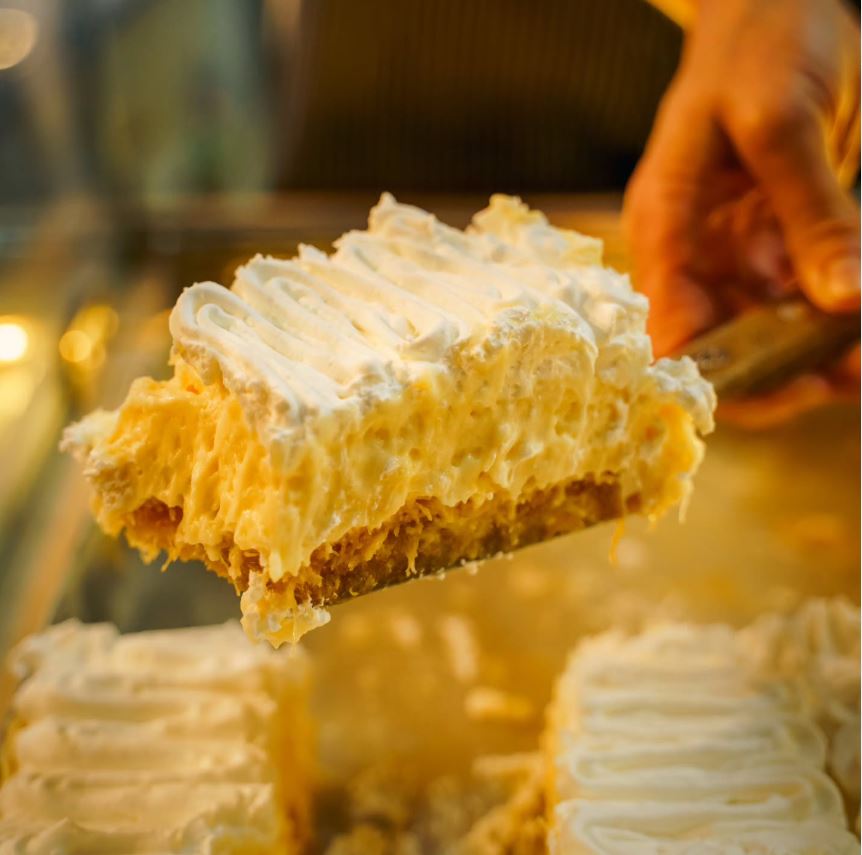
“At our core, we offer traditional Greek desserts, based on family recipes. Baklava, galaktoboureko, ekmek—each flavour is a memory trigger. That’s our goal: to bring forgotten things back to the surface. Family tables, warm gatherings, the image of mum in the kitchen. With every dessert, we want to awaken those memories.”
What does success mean to you?
“My greatest success is when customers tell me: ‘It reminds me of my mother’ or ‘It reminds me of my grandmother.’ That sentence is my biggest reward. I’m not interested in cooking like a fine-dining chef. I want my food to bring back memories, to connect people to their past, and to make them feel familiarity and warmth.”
Your signature dishes?
“The baklava and the ekmek, without question.”
What do Greeks prefer—and what about tourists?
“Greeks especially love the ekmek and our apple tart, while foreigners adore baklava. Many tourists, however, don’t know galaktoboureko, which for me is a true landmark of Greek gastronomy. It’s a flavour they need to discover. That’s why we always have freshly made galaktoboureko of the day, and something freshly baked at all times—from opening to closing. Freshness is non-negotiable for us.”
I tried the galaktoboureko myself, and every bite felt like a return to familiar, beloved flavours. At the same time, I was enjoying a fascinating conversation—one that made me realise that Alchemist is not a story that began just three years ago. It’s a journey that started elsewhere before finding its way to the heart of Athens.
So Alchemist isn’t your first business venture?
“Alchemist as a brand has a ten-year history. It began in Pelion, where we moved and developed several ventures—from hotels to shops. The pandemic period, however, was extremely difficult for us. We gradually began closing our businesses, with the last one shutting down just this year. Through that painful process, we identified what could survive under those conditions. That’s how the idea of bringing Alchemist to Athens was born. We’ve been here for the past three years.”
Was it hard closing so many businesses?
“It was—and still is—extremely painful. Each shop was something we created from scratch. We never approached them coldly, as businesspeople thinking only in numbers and profit. For us, each place was more than work—it was an extension of our soul. We loved them deeply, and it hurt every time we had to close one.”
Why Pelion, if it wasn’t your hometown?
“No, we’re not from Pelion. The choice came from my husband’s love and desire to live in a place untouched by human intervention, somewhere difficult to alter. Pelion was ideal because of its extraordinary biodiversity and many other qualities that make it unique. So we followed that need and began our journey there.”
Was it difficult for you to adapt?
“Very difficult. I come from Athens—two generations back—so I had no connection to rural life. The change was huge and took time to get used to, but it was an experience that made me see life from a completely different perspective.”
And then you returned to Athens—how did that feel?
“When I left Athens, I said I would never return. In my mind, it felt like defeat. But it wasn’t. We’ve achieved something big here, and perhaps without that life journey in Pelion, we would never have reached this success. Everything had its purpose, and returning to Athens was the right choice at the right time.”
As I mentioned earlier, while waiting for the interview to begin, I overheard a woman asking:
“May I ask when the next cooking lesson is? Can I participate?”
Iris, Ioanna’s daughter, immediately stepped in, smiling as she explained. That’s when I realised I needed to ask about more than just the pastry shop.
What is Let’s Cook Greece?
“With Let’s Cook Greece, we help tourists understand what Greek food, Greek culture, and Greek hospitality truly mean. We organise traditional Greek cooking classes, which I run together with my daughter. Participants come to a beautiful old house in central Athens with a charming courtyard. There, they watch two generations—mother and daughter—cook and create together. It’s an experience full of nostalgia, warmth, and flavour.”
How do tourists react when they see a mother and daughter cooking together?
“They love it. It’s an exchange of cultures and experiences. We spend three full hours together, without interruption, and whatever happens during that time is truly magical. We cook together and then eat together. I notice that many young people and children no longer see food as a basic necessity, but as a form of enjoyment and entertainment. It’s very different to cook because you need to survive, versus paying to live an experience. What we offer is the experience of Greek home cooking—not as you’d taste it in a restaurant, but as you’d live it in a Greek household.”
Who chooses the menu?
“It depends on the season and the group. We love making dolmades, stuffed cabbage rolls, and moussaka. Foreigners often ask for the dishes they already know—like moussaka and tzatziki—but we always teach them more. We always make pies, because pie-making is deeply rooted in Greek culture. I remember a woman telling me: ‘I’ve spent thousands of euros buying spinach pies and never imagined how simple it is to make one.’ That made me incredibly happy.”
Are there specific dishes prepared in each class?
“We always adapt the menu to the participants’ needs and wishes. Typically, we cover about five hours and prepare five dishes: always a dessert, a pie, one or two main courses, and a side dish. Everything is flexible—some guests may be vegan, others avoid certain meats. Fortunately, Greek cuisine offers immense variety, so we always find the right balance.”
What makes Greek food special?
“Greek food is a window into the culture and lifestyle of each place. Even though we talk about ‘Greek cuisine,’ gastronomy varies from region to region. In Ioannina, for example, pies are very different from those in Thessaly or on the islands. That’s because each region cooked based on what it had. Epirus had more dairy and meat; poorer areas relied on wheat and vegetables; the islands shaped their diet around local products.
Understanding not just the flavour but the story behind each dish helps us see how Greek cuisine is a gastronomic narrative of history and local conditions.”
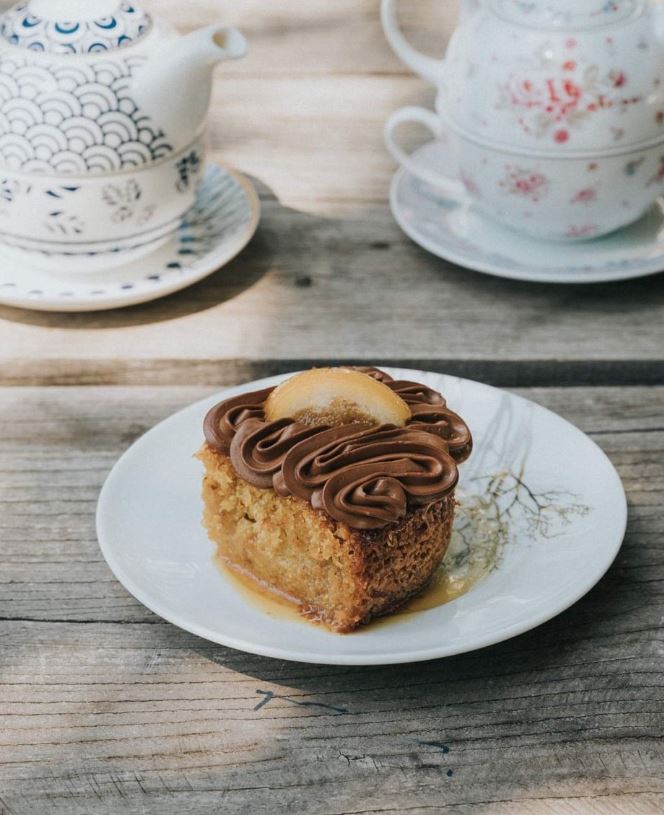
After a truly captivating conversation, I enjoyed my galaktoboureko—which, as you’ll agree if you try it, is simply outstanding. I didn’t stay alone for long. The shop filled up once again, and seeing people waiting for a seat, I decided to share my table. Two young tourists from Germany happily accepted. One enjoyed a luscious walnut cake, the other chose baklava. Our table filled with conversation and flavours, forming a small community around the sweets of Alchemist.