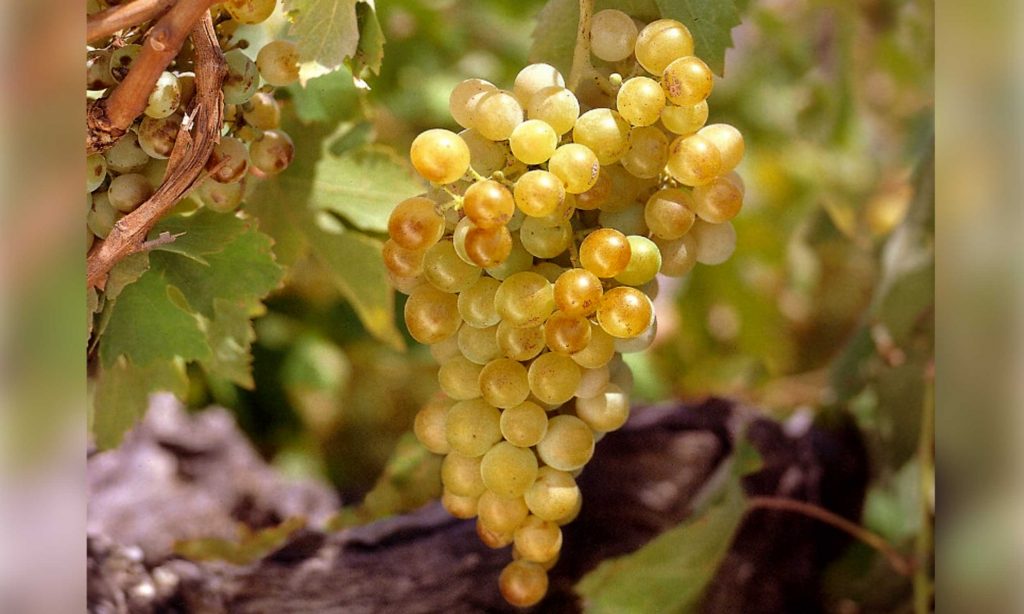

Today, there exists a truly indeterminate number of grape varieties worldwide.
Every wine-producing country cultivates both its indigenous grapes and the so-called “international varieties” — those found across much of the global wine landscape.
Greece is no exception.
While many argue that Greece possesses hundreds of native varieties, in reality only a few dozen are actively involved in commercial wine production. As for international varieties, Greece cultivates the most widely known ones, along with others typically found in regions with climates similar to the Greek environment.
Discover the character and some oenological insights into the most important of them.

ASSYRTIKO
Assyrtiko originates from Santorini, where it produces PDO (Protected Designation of Origin) dry white and sweet wines (Vinsanto). Today it is cultivated almost throughout Greece, with plantings also found in Australia and Italy. It expresses itself best in volcanic soils.
Aromas:
Low to moderate intensity, dominated by lemon, green apple and grapefruit, often accompanied by mineral notes and hints of flinty, glue-like nuances.
Palate:
Strikingly high acidity, dense fruit concentration and typically a long, persistent finish.
Outside Santorini, Assyrtiko retains its aromatic profile, though the palate expression differs from its island origin.
It participates in several PDO zones:
PDO Plagies Melitona and PDO Rhodes (dry wines), PDO Paros, PDO Sitia and PDO Monemvasia–Malvasia (sweet wines), and PDO Handakas–Candia (dry and sweet wines).
MALAGOUSIA
One of the fastest-growing indigenous varieties in terms of plantings and recognition — and a favourite among Greek consumers.
Clone:
Psiloragi, producing more aromatic wines.
Origin:
Mountainous Nafpaktia.
Aromas:
Floral (jasmine, honeysuckle), stone fruit and citrus (lime, grapefruit), with notes of mint, beeswax, orange marmalade, broad-leaf basil and green pepper.
Palate:
High alcohol, moderate acidity and a medium, slightly oily body.
Cultivation:
Macedonia, scattered areas of Central Greece (Aetolia-Acarnania, Phthiotis, Attica) and the Peloponnese.
Participates in the PDO Rhodes zone for dry wines alongside Athiri and Assyrtiko.
MOSCHOFILERO
A pink-skinned variety with several clones (Asprofileri, Grizofilero, Mavrofilero).
Aromas:
Rose petals, lemon and exotic lychee fruit, reminiscent of Gewürztraminer.
Palate:
Low alcohol, high acidity and medium body. In Mantinia it produces dry white and sparkling PDO wines.
Rosé expressions are also available on the market. In southern Greece, it is often used in multi-varietal blends.
Rarely aged in oak, as barrel maturation tends to mask its primary aromas.
MUSCAT
A highly aromatic variety with several clones, most commonly Muscat of Alexandria, Muscat à Petits Grains and Muscat Trani.
Growing Regions:
Eastern Aegean islands, Cyclades, Peloponnese, Central Greece, Kefalonia and Crete.
Palate:
Low acidity with a creamy and pleasant texture.
Aromas:
Floral notes, lemon, mint, honey, apricot, pineapple, bergamot and dried fruits.
Used mainly for sweet wines in PDO zones such as Muscat of Samos, Lemnos (also for dry wines), Rhodes, Kefalonia, Patras, Rio Patras, Malvasia of Sitia and Handakas–Candia.
ROBOLA
Origin:
Closely associated with Kefalonia, where it produces dry PDO wines. Also cultivated in Atalanti.
Aromas:
Lemon, green apple, citrus and ripe tropical fruits.
After Ageing:
Subtle mineral notes such as flint, reminiscent of Riesling (in carefully crafted examples).
Palate:
Sharp acidity reminiscent of Chablis, medium body and moderate alcohol.
OTHER VARIETIES
Savvatiano
Primarily cultivated in Attica, Euboea and Boeotia. Often misunderstood, it can produce well-balanced white wines with good alcohol–acidity harmony when grown at altitude; otherwise, it yields high-alcohol, low-acidity wines.
Roditis
Moderate aromatic intensity of tart fruits and pineapple, with a fresh palate and high acidity.
Vidiano
From Crete (mainly Rethymno and Heraklion). High alcohol, moderate acidity and a distinctive aromatic profile.
Vilana
Crete’s only widely cultivated white variety. Pale colour, aromas of green apple and unripe fruit, with refreshing acidity on the palate.
Aidani
Cultivated in the Cyclades. Medium alcohol and acidity, aromatic in nature, ideal for blending with high-alcohol or high-acidity wines such as Assyrtiko.
Athiri
Grown in the central and southern Aegean. Produces moderately alcoholic wines with subtle aromatics and low acidity.
Lagorthi
A rare variety from the Kalavryta region. High acidity, mineral character and medium-plus body.