
Report: Ioannis the Wine Lover
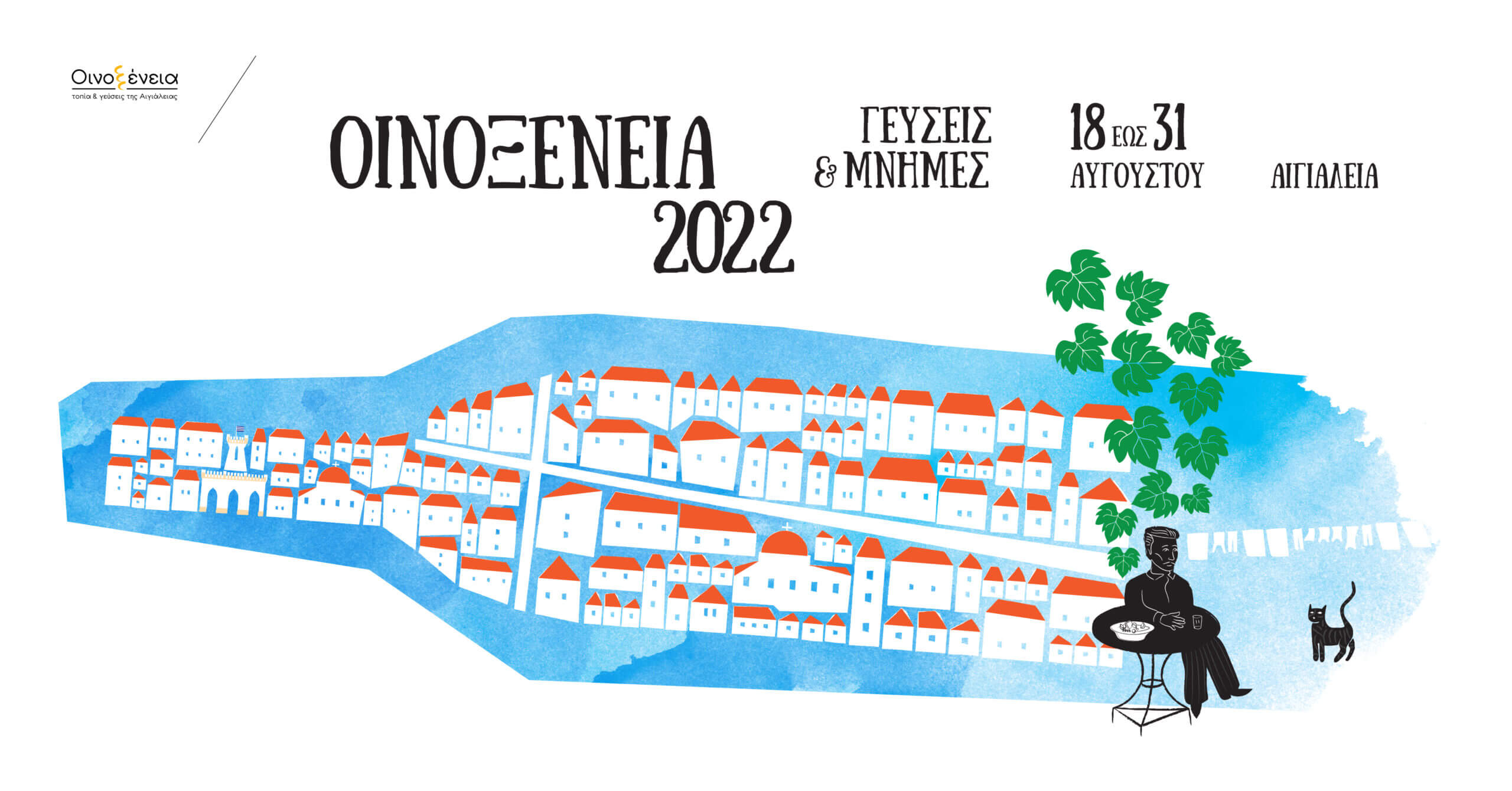
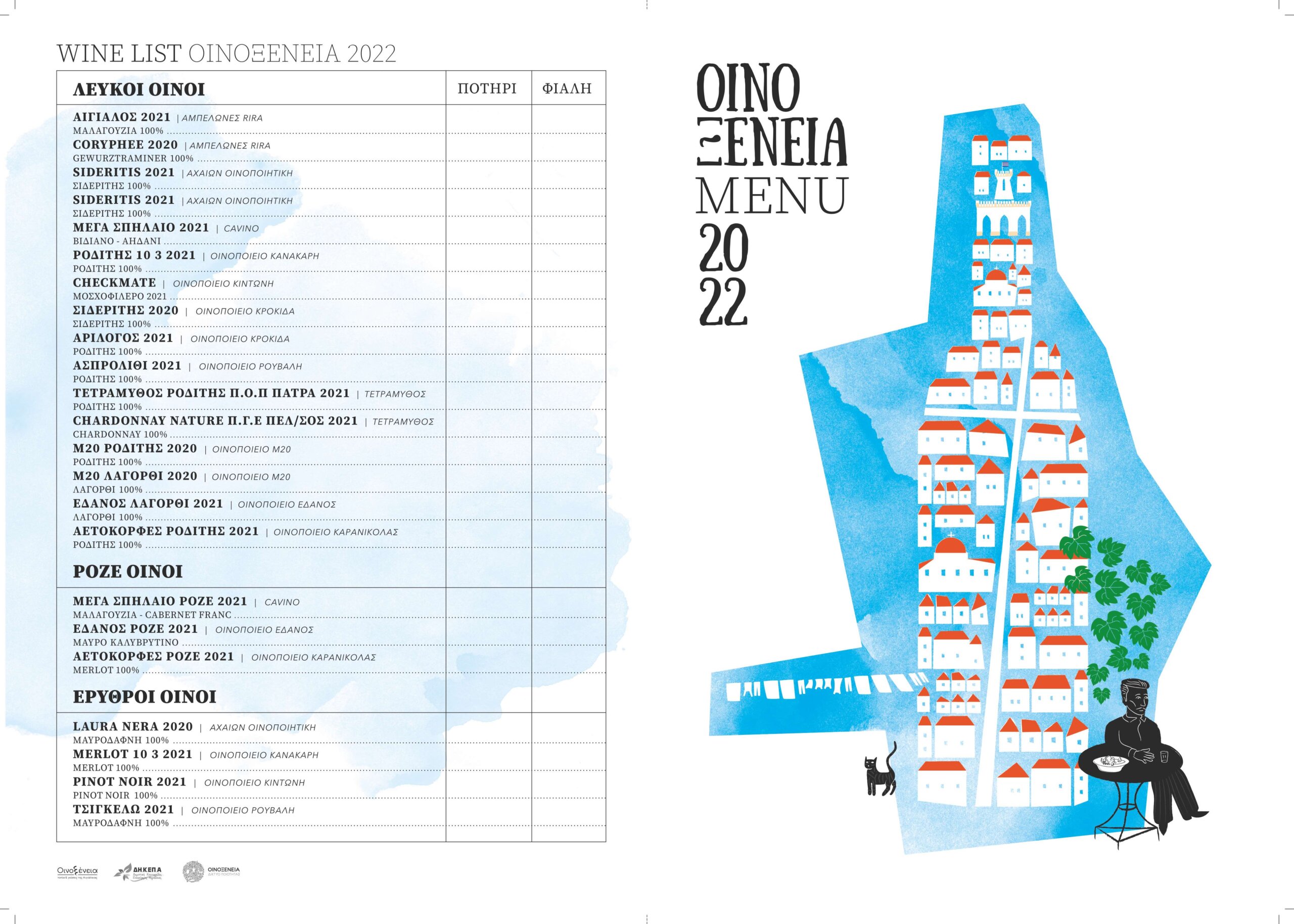
Oinoxeneia 2022
With its gaze firmly set on the future, Oinoxeneia returns today, 18 August, reaffirming a dynamic institution that has marked every August in Aigialeia since 2013. This year’s edition introduces structural innovations expected to broaden its impact on the local community and further strengthen Aigialeia’s position on Greece’s wine and gastronomic map, highlighting the region’s comparative advantages.
Oinoxeneia 2022 also carries a distinctive commemorative dimension, coinciding with the 100th anniversary of the Asia Minor Catastrophe. The program includes events of remembrance and tributes to the culinary heritage and aromatic traditions brought to Greece by refugees after their uprooting—traditions that left an indelible mark on the local cuisine.

A New Governance Model
For the first time, and by decision of the Aigialeia Municipal Council, the festival is organized by a nine-member Steering Committee composed equally of representatives from DIKEPA Aigialeia, the Oinoxeneia Quality Network, and three distinguished citizens appointed by the Mayor based on their expertise and experience.
This structural reform signals a new era for the institution.
Oinoxeneia was founded in 2013 by Angelos Rouvalis, who laid its foundations in close collaboration with then-DIKEPA President Vasso Psychrami. Today, according to Rouvalis, the adoption of the nine-member committee—three members from DIKEPA, three from the Oinoxeneia Winemakers’ Network, and three appointed personalities selected from proposals submitted by the Network—aims to strengthen and upgrade the institution’s long-term trajectory.
Evangelia Amanatidou, oenologist at Cavino and Secretary General of the Network, emphasizes that Oinoxeneia’s established dynamism required renewal to avoid stagnation. The new governance model aspires to ensure flexibility, continuity, and sustainable growth.
Objectives & Vision
According to Network President Sossana Katsikosta, the Oinoxeneia Quality Network comprises wineries, restaurants, hospitality enterprises, and producers of premium local goods such as olive oil.
Key objectives include:
- Optimal organization and qualitative upgrading of the festival.
- Institutional continuity beyond administrative changes.
- Accumulation of know-how and enhanced operational efficiency.
- Broad social acceptance and the cultivation of a lasting culture of hospitality.
- Participation of experienced, capable, and reliable representatives from both institutions and civil society.
Dialogue culture within the nine-member committee is cited as a positive development, alongside the recognition that more entrepreneurial management of resources and systematic pursuit of sponsorships are necessary to sustain high-quality programming.
Quality remains the central concept: quality of products, services, and events that elevate the region’s wine, gastronomy, culture, and traditions.
The Restaurants: Support, Reservations & Dialogue
The restaurant sector expresses both support and measured concern.
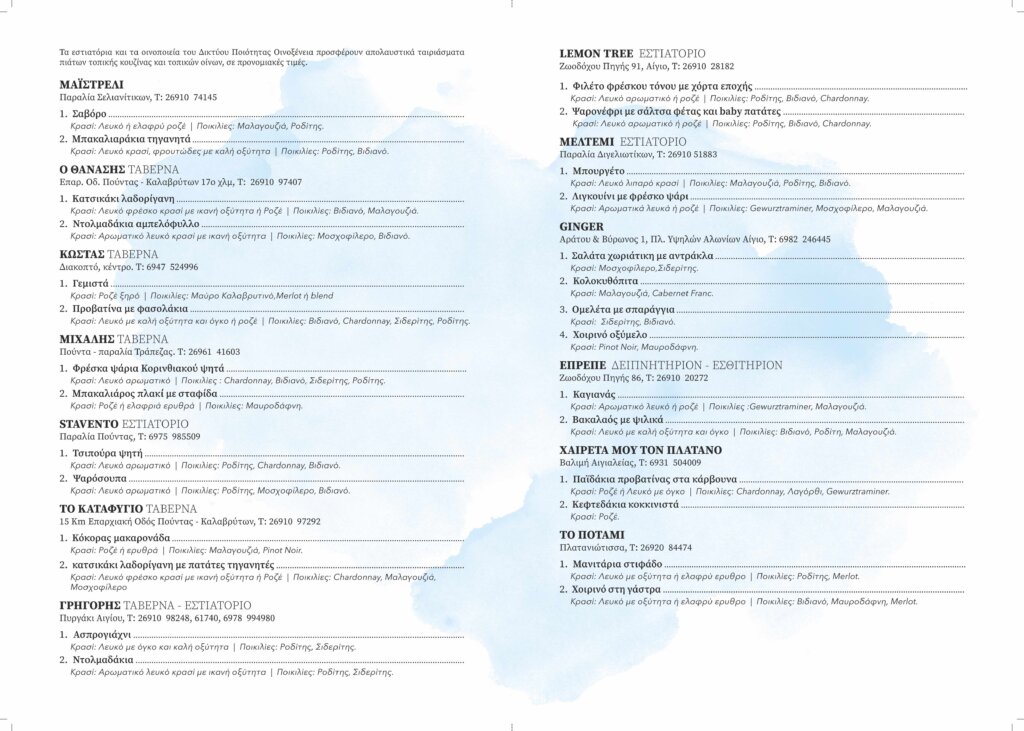
Panagiotis Panagopoulos, owner of “Maistreli” in Selianitika, underscores the institution’s importance but calls for improved organization and questions the suitability of August—peak season for restaurants—for hosting such an intensive program.
The restaurant “Eprepe,” owned by Giorgos Drougoutis and Charikleia Roufoglali, proposes a structural separation between wineries and restaurants, suggesting dedicated tasting stands organized solely by wineries, independent of dining venues.
Conversely, the family-run restaurant “Meltemi” in Digeliotika—operated by the Apostolopoulos family—expresses enthusiastic support. Renowned for authentically blending local and refugee culinary traditions, “Meltemi” views Oinoxeneia as a gateway to the region’s gastronomic and wine culture. The restaurant has been previously honored at the Athens Concert Hall for authenticity of flavor.
“Lemon Tree,” a newer restaurant on Aigio’s seafront, participates to further promote its cuisine and local wine pairings.
Notably absent this year is “Palia Agora,” a long-standing culinary landmark in central Aigio. The owners express disappointment over what they perceive as insufficient recognition of their contribution to the local gastronomic landscape.
Despite differing views, participation remains slightly increased this year, with 11 wineries involved compared to the usual 10.
Looking Ahead
President of DIKEPA, Maria Tsoukalá, highlights the synergy created between winemakers, restaurateurs, personalities, and ideas. While acknowledging that the effectiveness of the new committee will be proven in practice, she expresses optimism about its positive contribution.
Rouvalis underscores the festival’s broader impact: Oinoxeneia has inspired dormant local forces to develop parallel initiatives, constituting a lasting innovation. He cites the example of Dramoinognosia in Drama, where hoteliers spearhead the event, noting a 30% increase in clientele during the festival. In Aigio, he observes, wineries remain the driving force—a challenge and responsibility alike.
Commemorating the Asia Minor Catastrophe
This year’s program integrates events dedicated to the centenary of the Asia Minor Catastrophe, acknowledging Aigio’s historical reception of refugees, primarily from the islands of the Sea of Marmara.
Highlights include:
- 18 August – Opening gala titled “The Lyricism of Smyrna” at the George Papas Theatre in Aigio, featuring opera performances with narrator, two sopranos, and a tenor.
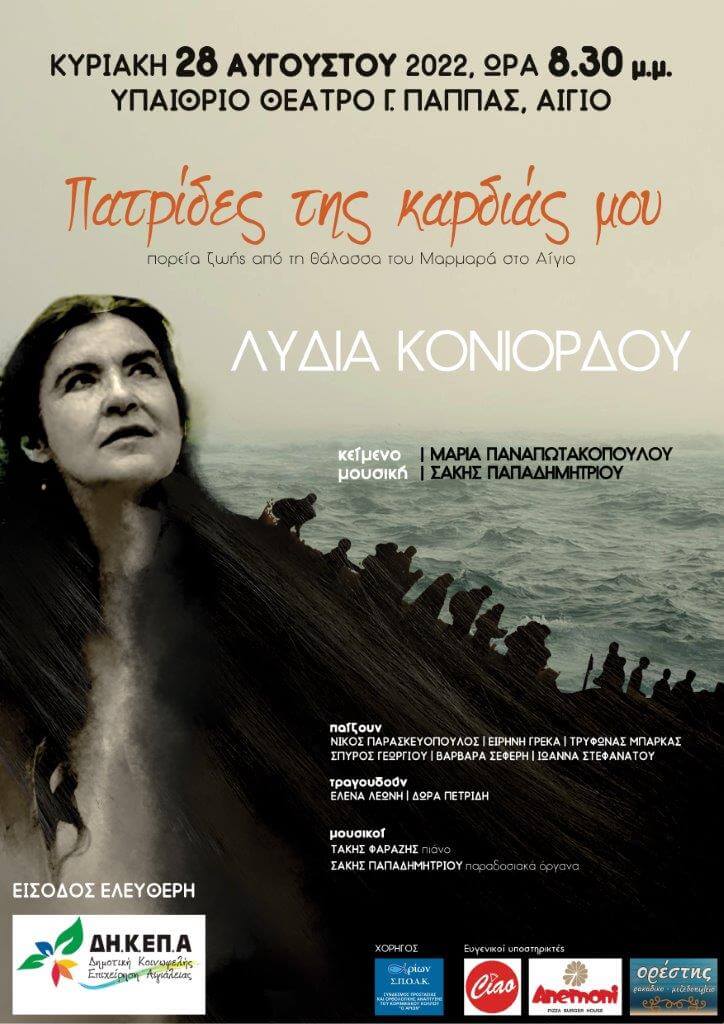
- 25 August – Screening of the documentary “Homelands of Our Hearts: A Journey from the Sea of Marmara to Aigio,” featuring Lydia Koniordou, text by Maria Panagiotakopoulou, and music by Sakis Papadimitriou.
Oinoxeneia 2022 returns to its full-scale format after last year’s limited three-day edition due to pandemic restrictions, once again offering open events to the public.
With renewed structure, collective ambition, and a shared commitment to quality, the festival embarks on its next chapter—aspiring to further elevate Aigialeia’s wine and gastronomic identity.