
By Eleftheria Davatzi
Greece is scented with symbolic sweets during these days. After all, one of the greatest joys of the festive season is when the home fills with desserts and aromas. Their fragrances evoke care, warmth, and comfort. Trays of melomakarona and kourabiedes, towering plates of fried, honey-soaked diples, and fragrant, fluffy Vasilopita cakes fresh from the oven.
But Christmas sweets are not limited to these alone. And I will begin with a traditional delicacy from Epirus—perhaps less widely known.

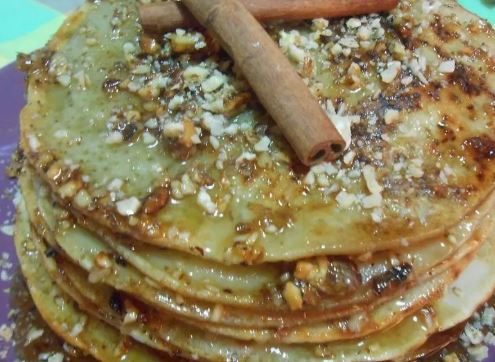
The “Swaddling Cloths” of Christ
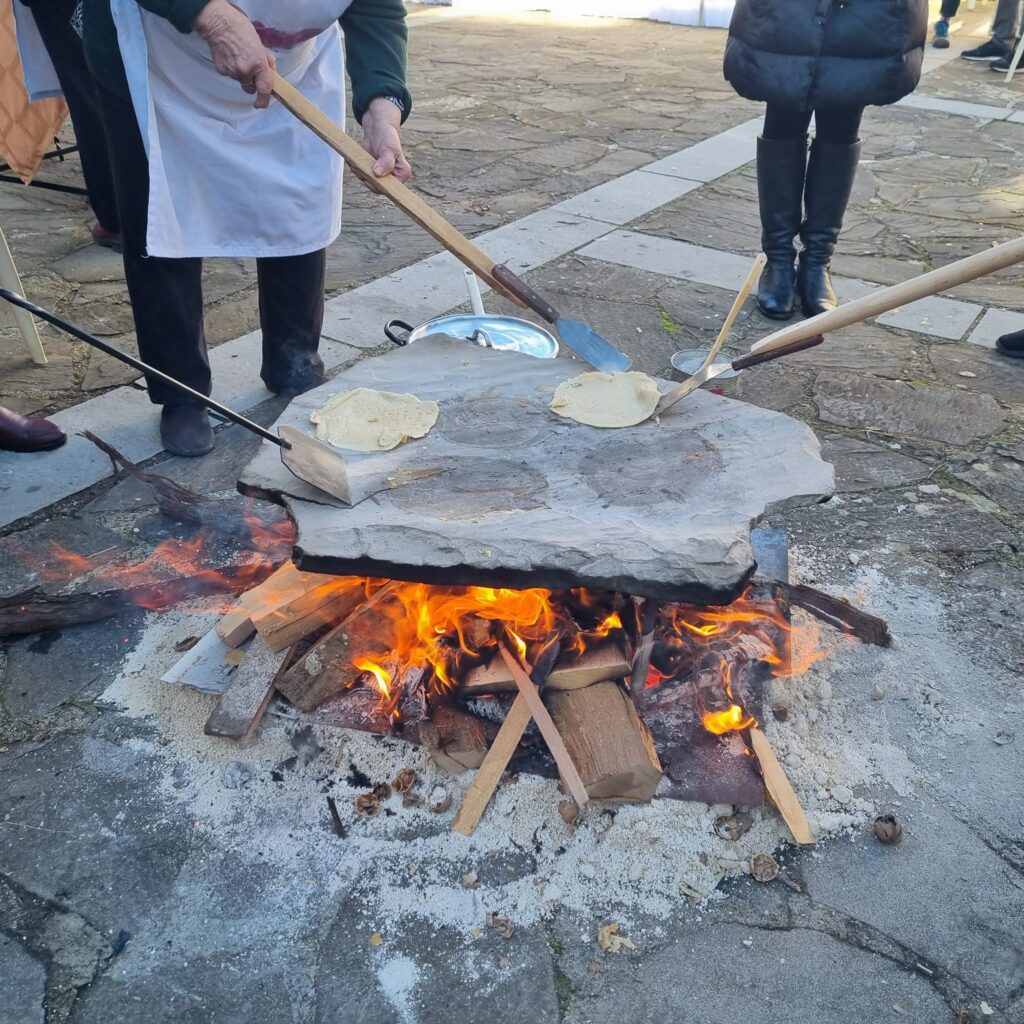
A distinctive traditional sweet comes from Epirus and the Zagorochoria villages. At dawn on Christmas Day, locals prepare thin pancakes rich with walnuts, resembling crêpes, baked over the hearth. Once cooked, the pancakes are layered one atop another, generously filled with walnuts and syrup. They are known as “spargana”—swaddling cloths. These delicate sheets of dough symbolise the swaddling cloths with which the Virgin Mary wrapped the infant Christ.
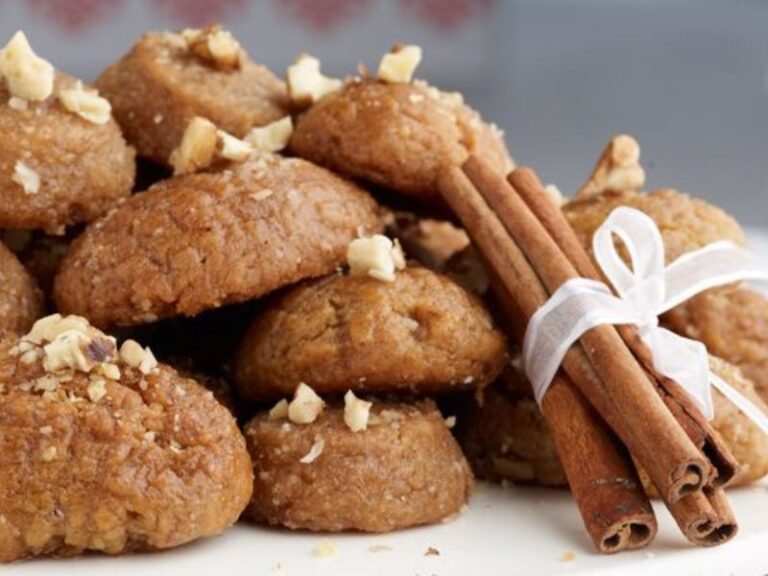
Melomakarona: Greece’s Ultimate Christmas Symbol
Their ingredients are entirely seasonal: olive oil, fresh orange juice, honey, walnuts. Each variation carries its own meaning and story. Etymologically, the word derives from the ancient Greek makaria—a type of kneaded, semi-sweet funerary bread with an oval shape, much like today’s melomakarono, offered at memorial feasts to honour the deceased.
Why, then, do we eat them at Christmas, given this origin? Precisely to preserve the memory of loved ones—those we feel are most absent during these days of family warmth and togetherness.
photo: ioannasnotebook
There is, of course, some confusion with phoínikia, which arrived with the Constantinopolitan Greeks. The difference lies in the fact that phoínikia are Christmas cookies, larger than melomakarona, filled with honey, walnuts, and cinnamon, and not always soaked in syrup. They are traditionally made with alyssiva (wood ash water), which gives the dough its characteristic lightness and crumbly texture.
Isli: From Trebizond to Asia Minor
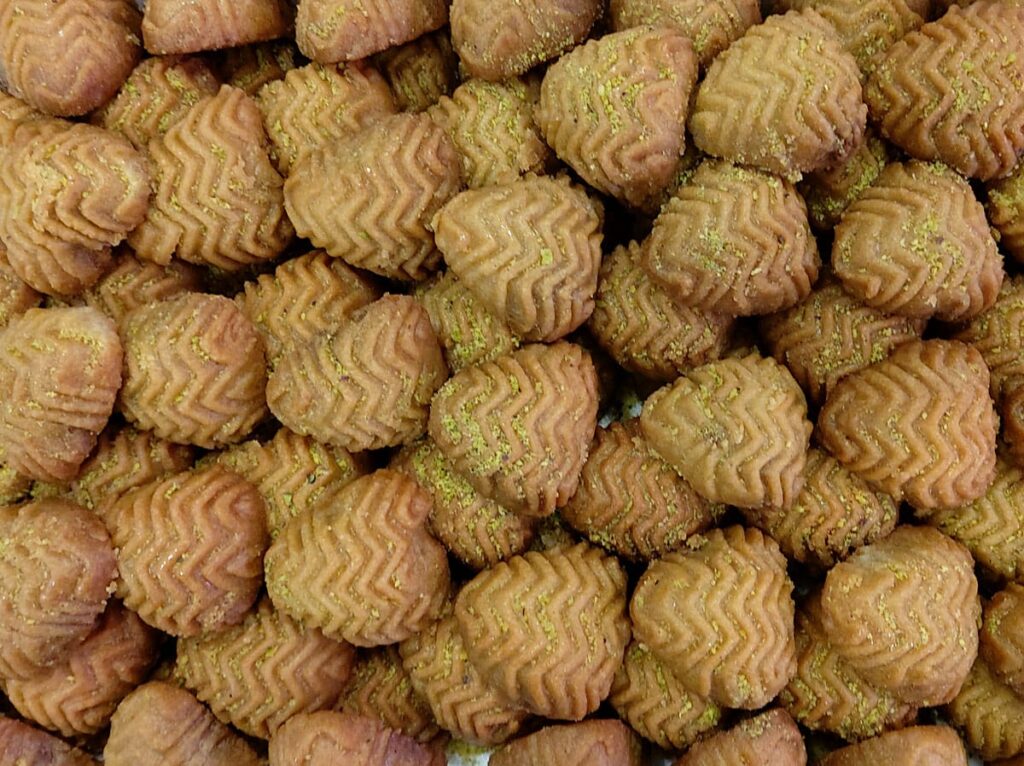
Isli, another syrup-soaked sweet, bears closer resemblance to melomakarona. However, they are made with butter rather than olive oil. Their homeland is Trebizond in Pontus and later Cappadocia. Their name is Turkish—“iş” meaning “work”—and they are aptly named, as they are rather labor-intensive to prepare.
Their most distinctive feature is the delicately “combed” surface, created with a special metal tool traditionally crafted by blacksmiths exclusively for Isli—a thoughtful gift for homemakers. This sweet is prepared for New Year’s Day, Epiphany, and the feast of St. John.
Diples: Tradition in Layers
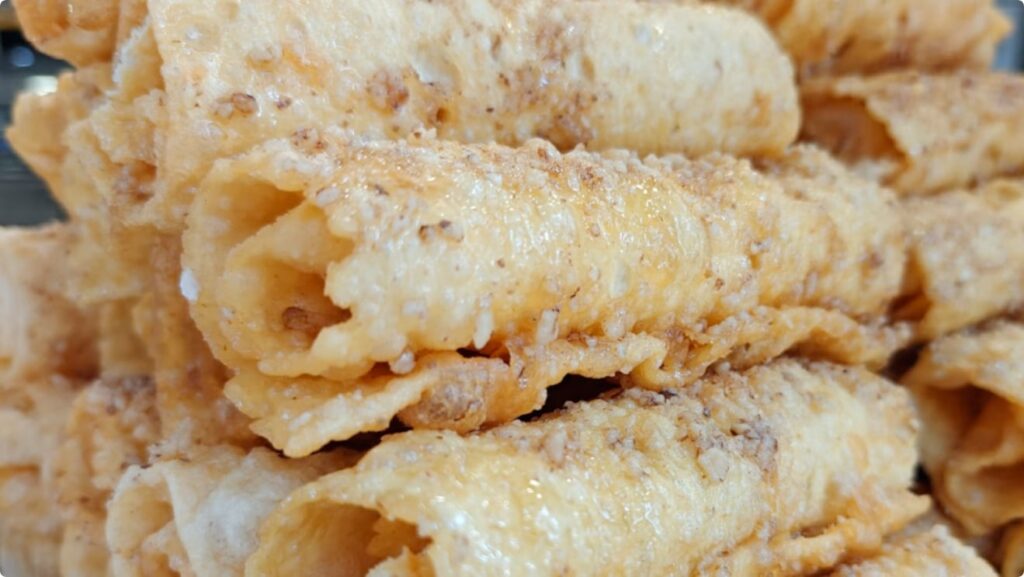
Diples—also known as avgokalámara or xerotígana—exude tradition no matter the name. They symbolise happiness, prosperity, and fertility, and are served at weddings, baptisms, and festive occasions. Their folded shape gathers wishes (the more folds, the more wishes), while honey symbolises a sweet, prosperous life. In earlier times, they were also associated with the swaddling cloths of Christ.
Although the recipe appears simple—flour, eggs, and water—it is among the most technically demanding traditional sweets. Why? Because it requires skill and experience to ensure the dough does not smell of egg, the sheets are rolled paper-thin, and the frying is swift and precise so the dough folds or rolls gracefully as it hits hot, high-quality olive oil. And that is not the end: the honey drizzling must be carefully balanced so the diples remain crisp and never soggy.
Kourabiedes: Christmas Snowfall in Sugar
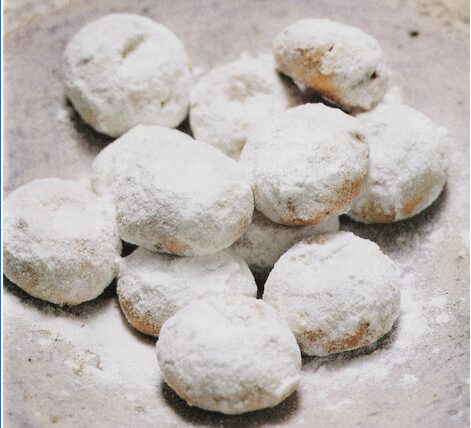
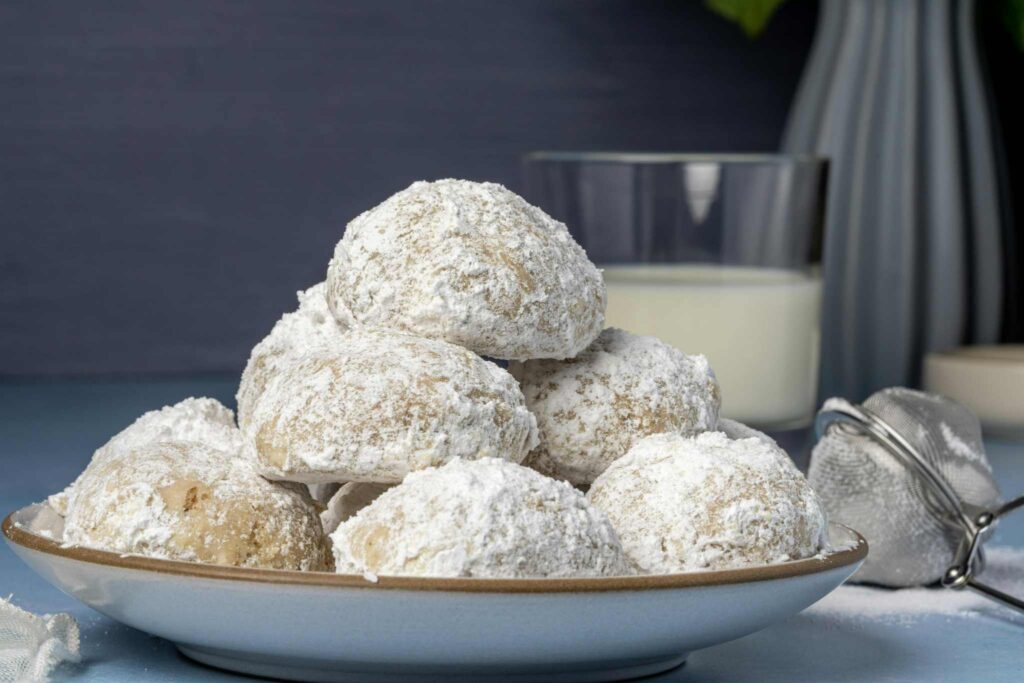
The name kourabiedes (from qurabiya) has Azeri roots, was adopted into Turkish as kurabiye, and reached Greek as kourabiedes. The word combines kuru (dry, twice-baked) and biye (biscuit). In other words, well-baked—but never over-roasted.
In Greece, kourabiedes became a quintessential Christmas sweet, although in many regions they are also offered at baptisms and other joyful occasions. Their snow-white appearance, dusted generously with powdered sugar, symbolises joy and happiness. Over time, the kourabiedes have become synonymous with celebration and hospitality.
Christopsomo: Bread Adorned with Meaning
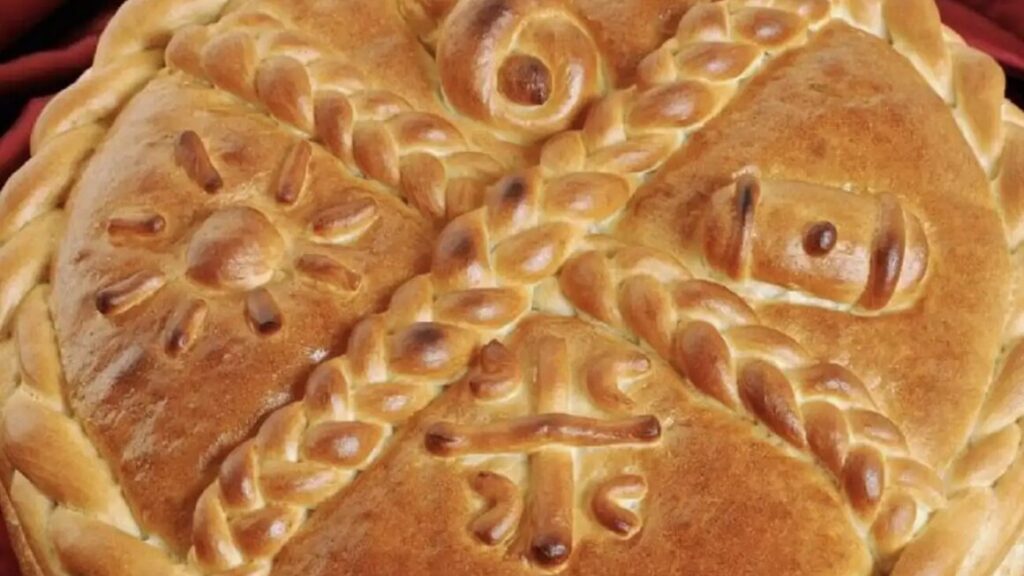
Christopsomo belongs to the family of enriched festive breads, akin to loaves and rings, sweetened with honey or sugar and enriched with dried fruits and nuts. Across Greece, the most characteristic Christmas bread is Christopsomo—also known as Christ’s Bread or Stavropsomo.
It is often simple, without excessive sweetness, yet rich in symbolic ingredients such as walnuts and raisins, which are not commonly used in everyday bread. Decorative dough elements adorn the surface—most often a large cross—with whole walnuts pressed into the centre and arms. Depending on the family’s occupation, additional symbolic motifs are shaped on top. Across Greece, countless regional variations exist.
In Kythera, for example, Christopsomo is darker due to the use of grape molasses (petimezi). Two loaves are always made—one for Christmas and one for New Year’s Day. In Zakynthos and Kefalonia, the Christmas Eve bread is a seven-leavened ring with a central hole, filled with raisins and walnuts, scented with spices, and decorated with sugar confections and dragées.
The truth is that if one were to search village by village, they would discover countless traditions and variations of Christmas sweets. What truly matters is their shared foundation: they are made with fine, special ingredients not commonly used throughout the year—each one carrying its own symbolism, memory, and meaning.