
Author: Ioannis the Wine Lover
Photo: Patroklos Stellakis
It has been called “the Tuscany of Greece”—a description that may sound exaggerated to some, but in truth, it isn’t. A set of geophysical and soil-related parameters shapes ideal conditions which, combined with the area’s climate, favour the perfect development of viticulture and the production of outstanding wines.
“…well-suited for the planting of vineyards,” Pausanias writes of Aigialeia and its soils in his Achaica. And Stavroula Kourakou—one of the grande dames of Greek wine, and honorary president of the global wine organisation—has said of Aigialeia’s hillside vineyards that, “from a soil-and-climate standpoint, it is among the most beautiful in the world, climbing gentle northern slopes and receiving the cool sea breezes that protect the fruit from the summer heat. It is a viticultural bioclimate unique in the world.”
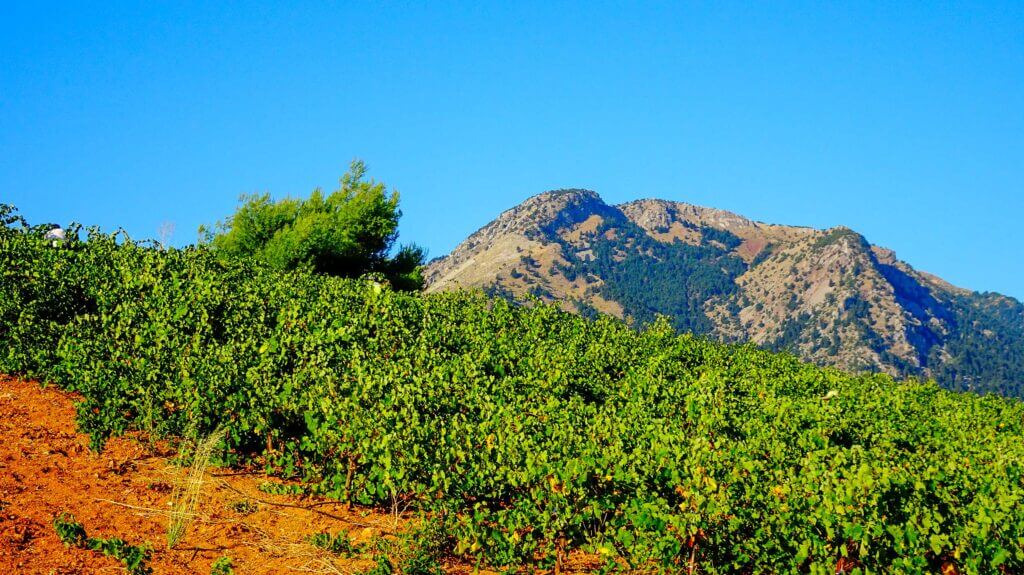
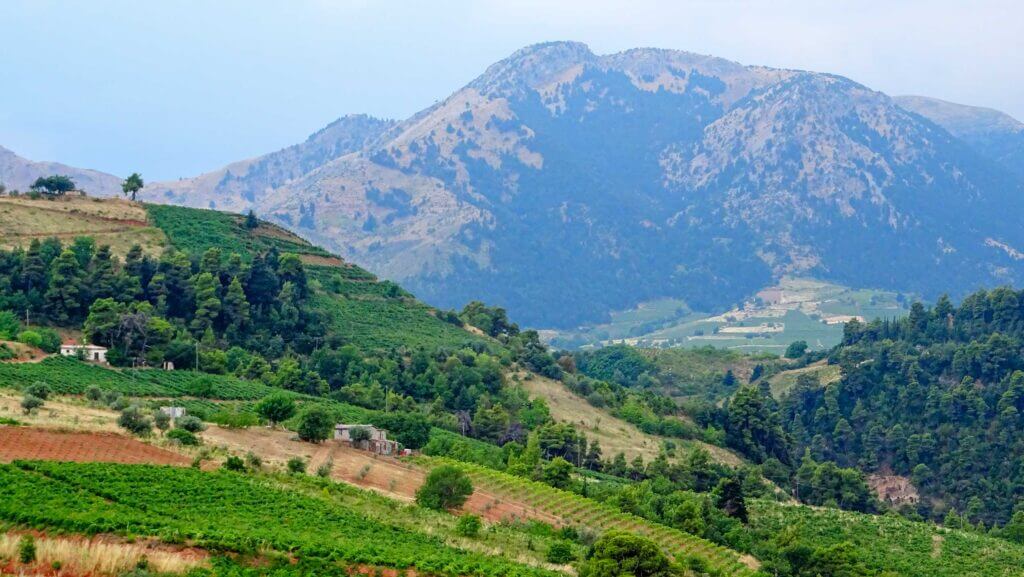
More specifically, this viticultural ecosystem—covering 11,000 stremmata (approx. 1,100 hectares)—spreads across Aigialeia’s slopes at elevations from 300 to 1,100 metres, with a north to north-eastern exposure. The vineyards are sheltered from high summer temperatures by the surrounding mountains and refreshed by the cool airflow of the Corinthian Gulf. This combination makes Aigialeia an exceptionally privileged winegrowing area; its vineyards are among the most beautiful in Greece and yield high-quality wines under both PDO (ΠΟΠ) and PGI (ΠΓΕ) designations.
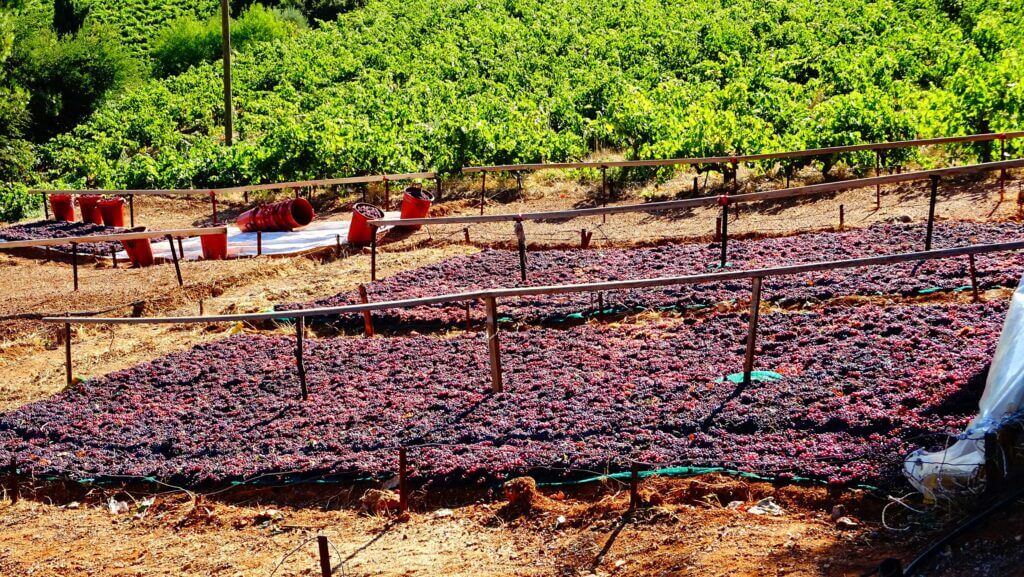
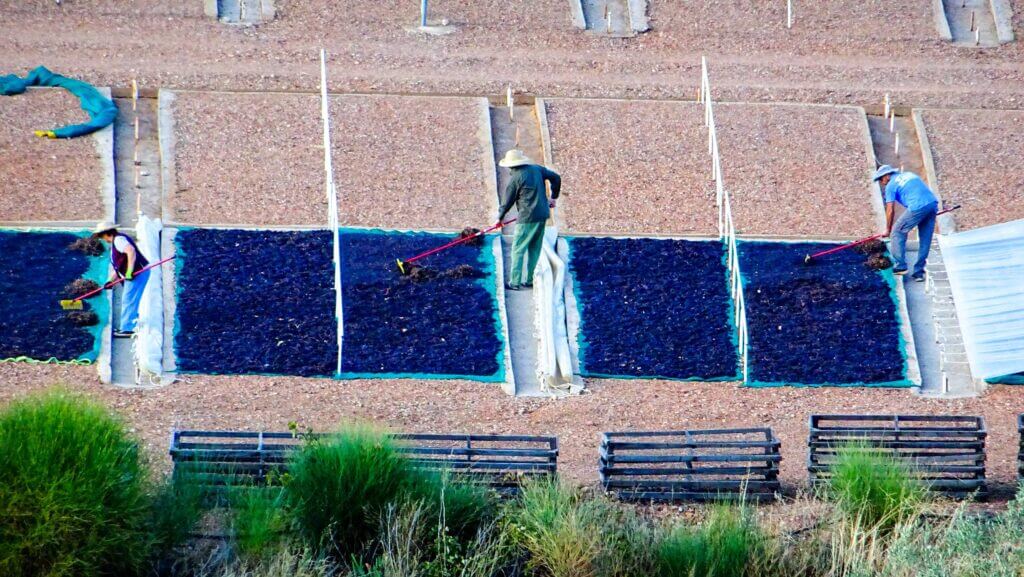
It should be noted that these 11,000 stremmata form part of the region’s total vineyard landscape of 60,000 stremmata. The remaining 49,000 stremmata are dedicated to the Corinthian currant, globally renowned for its quality under the name Vostitsa.

Aigialeia’s Vineyards
If we were to summarise Aigialeia’s viticultural identity in a single phrase, we might say this: an immense semi-mountainous and mountainous vineyardscape, divided into smaller viticultural “pockets” shaped by the rivers and streams that carve through mountainous Peloponnese before emptying into the Corinthian Gulf.
Seven rivers—Krios, Krathis, Vouraikos, Kerynitis, Selinous, Meganitis, and Foinikas—etch the terrain, opening gullies and ravines, tempering the climate, and together with the Corinthian breeze helping maintain summer temperatures of roughly 30°C by day and 18°C by night—conditions that make the area exceptionally suited to grape growing.
Aigialeia’s ideal climatic conditions and diverse soil types harmonised with geological changes over millennia—changes that resulted in the land rising as much as 2,000 metres above sea level. Marine remnants left behind as seawater receded through time helped form the limestone-rich soils that characterise Aigialeia’s slopes.
Vines are cultivated between 300 and 1,100 metres, and the Corinthian currant is also grown within these same zones. More precisely: from 300 to 800 metres, both currants and wine grapes are cultivated; from 800 to 1,100 metres, wine grapes dominate alongside currants. For the full landscape to make sense, it is worth noting that the lowland zone is mainly dedicated to citrus orchards and olive groves.
Varieties and Wineries
The varieties cultivated in wine-growing Aigialeia include: Roditis (the “fox” clone) over 9,000 stremmata, Lagorthi across 135 stremmata, and international varieties such as Chardonnay, Sauvignon Blanc, Cabernet Sauvignon, and Syrah (about 400 stremmata each), plus Merlot (about 150 stremmata). Other varieties are also planted on smaller surfaces for now—Assyrtiko, Kydonitsa, Riesling, and more.
Roditis from Aigialeia is the region’s signature variety, arguably its vinous identity. Wines made from Roditis grown in mountainous Aigialeia are marked by fruit-driven aromatics—especially citrus, melon, and exotic fruit—a crisp, mouthwatering acidity, a surprisingly generous body even at 11–12% ABV, and a distinct mineral edge on the palate. These traits clearly set Aigialeia’s Roditis apart from, for instance, Roditis grown in Western Achaia, where the wines do not typically show such intensity or definition.
It is no coincidence that tasters consistently recognise and describe these characteristics, including major international names deeply familiar with Greek wine, who link them directly to Aigialeia.
According to the reputable magazine Sorbet, Roditis wines from mountainous Aigialeia also perform exceptionally well in blind tastings across various panels, often scoring higher than other varieties—and higher than Roditis wines sourced from vineyards around Patras.
As for wineries active in Aigialeia, an updated list (via Giorgos Makris’ Wine Explorations) includes:
- RIRA Vineyard – Rira site, Arravonitsa Erineou, Aigialeia, Achaia
- Achaion Winery – Aigio, Aigialeia, Achaia (visitor-friendly winery) & Katsikostas Heirs, Achaion Winery
- Cavino Winery – Aigio, Aigialeia, Achaia & Mega Spileo Estate (Diakopto–Kalavryta road, Lova site)
- Edanos Winery / Ligdopoulos Vineyards – Kalamias, Akrata, Aigialeia, Achaia & Chrysampelon (Aigeira, Aigialeia, Achaia)
- Krokidas Winery – Akrata, Aigialeia, Achaia
- Kanakaris Brothers Winery – Eliki, Diakopto, Aigialeia, Achaia
- Kintoni Winery – Aigio, Aigialeia, Achaia
- Karanikolas Winery – Paraskevi, Aigio, Aigialeia, Achaia
- Oinoforos / Angelos Rouvalis – Selinountas, Aigio, Aigialeia, Achaia
- Tetramythos – Ano Diakopto, Diakopto, Aigialeia, Achaia (visitor-friendly winery, wine bar & guesthouse)
- Nikos Zisimopoulos Wines – Aigio, Achaia (blog)
- Plithakis Winery – Selianitika, Sympoliteia, Aigialeia, Achaia (Facebook)
It is also interesting to note that the area hosts several noteworthy smaller-scale (more or less professional) projects, such as: Thealos Gi, Gennata-Partheni Winery (Ampelokipoi), M20 Winery (Neratzies, Sympoliteia, Aigialeia), Vinidro Wines (Aigio, Facebook), Ktimataki Vineyards (Paraskevi, Aigio), and Nikolopoulos Winery (Ano Ziria, Erineos, Facebook).
Beneficial Rainfall
Locals used to say that if it starts raining here, it “forgets” to stop—an ironic nod to the fact that rainfall in Aigialeia, on the western edge of Greece, is significantly higher than the national average. The viticultural zone receives substantial precipitation—roughly 700 to 1,100 mm. On its own this might not sound decisive, but combined with the way rainfall increases linearly with altitude, it becomes a defining factor.
The wettest months are typically November and December, while the driest are July and August—which also coincide with the highest temperatures. The coldest months are January and February. Average annual temperatures across the zone range roughly from 15°C down to 11°C, decreasing with altitude.
It is therefore logical that vineyards at around 840 metres can show a 6°C lower temperature compared to those in the lowland zone.
More specifically, the broader Mediterranean climate up to 270 metres is characterised by mild humidity and a gentle winter, with an average January minimum (the coldest month) of 2.9°C. Up to 800 metres, the climate becomes humid with a colder winter, with average January minimum temperatures around 0°C.
According to Professor Kalyvas, analysis of climatological tables shows significant average monthly diurnal temperature variation, with a mean thermal amplitude reaching 14.5°C, increasing with altitude. This variation also becomes more pronounced in June, July, August, and even September, ultimately shaping particularly favourable conditions during grape ripening.
It is also worth noting that Aigialeia lends itself to relatively easy organic viticulture, according to values cited in Mr. Nikas’ work regarding a hydrothermal index measuring disease pressure linked to both rainfall and temperatures during the vine’s active growth period. These values highlight the region’s capacity for organic farming—something already evident in Aigialeia, which ranks first nationwide in organic vineyards.
In conclusion, the region’s geological and geophysical foundation, combined with its climatic conditions, makes Aigialeia’s comparative advantage in viticulture and high-quality wine production unmistakably clear.
“Man Is the Measure of All Things”
Of course, none of what we describe about vine-rich Aigialeia would be possible without the human factor. Protagoras said: “Man is the measure of all things.”
In this phrase, the word “things” (chrēmata) does not mean money, as we might interpret it today. Rather, it refers broadly to qualities, beliefs, principles, values, and the capacity of each individual to perceive what is shared by all, each in their own way.
With this meaning, the great Sophist’s phrase—whose value Plato himself recognised—could be rendered as: “Man is the measure of all values.”
And it is precisely in this sense that the human factor enters viticulture and the production of high-quality wines in Aigialeia. Numerous experienced growers have built a tradition of vine cultivation—one passed down from generation to generation—an undeniably hopeful sign for the continuity and evolution of the region’s viticulture.
In some of the semi-mountainous communities studied, it was found that 82% of residents’ activities belong to the agricultural sector, while 46.2% of total agricultural land use is dedicated to vines. Similar patterns are observed across the zone’s other semi-mountainous and mountainous communities.
A Separate PDO Wine Zone
The wine world of Aigialeia, presenting all the region’s active assets, seeks formal recognition as a separate viticultural zone. It is a reasonable request, considering the reality described above. Beyond today’s momentum, such a proposal had long been voiced by leading wine figures.
Among them is Stavroula Kourakou, who spoke of a “viticultural bioclimate unique in the world,” noting that it is “one of the most beautiful vineyards in the world, as it climbs gentle northern slopes and receives the cool sea breezes that protect the fruit from the summer heat.”
Greece’s only Master of Wine, Konstantinos Lazarakis, in his book Greek Wines, underlines the necessity for the Slopes of Aigialeia to be among the first candidates for recognition as a separate viticultural zone, whenever the next category of new OPAO-style classifications is created.
Other wine personalities have also written in favour of recognising Aigialeia as a distinct zone.
In particular, in Ef Zin magazine, the oenologist and author (TEI professor) Argyris Tsakiris writes that on the slopes of Panachaiko and Helmos—under the broader indication “Slopes of Aigialeia”—wineries (including Oinoforos) have developed vineyards with low yields which, thanks to altitude and a cooler climate, as well as their northern exposure overlooking the Corinthian Gulf, produce wines from Roditis and other Greek and international varieties that stand out qualitatively compared to the simpler wines of Patras’ lowland areas.
The respected observer of Greek and global vineyards Nikos Manessis also refers to Aigialeia as a separate zone, while Professor of Viticulture at the Agricultural University of Athens Manolis Stavrakakis, in a 2008 presentation, emphasised that a formal O.P.A.P. zone should finally be established for the historic vineyard land of Aigialeia.
And it would be a serious omission not to mention the person who illuminated the immense significance of Aigialeia’s vineyards, made its comparative advantages known, and became the driving force shaping the region’s wine future: Angelos Rouvalis, the winemaker who opened new horizons on Aigialeia’s wine map. Naturally, we must also highlight the contribution of his fellow winemakers, who rose to the challenges of the future and—each with their own strength and passion—added their own stone to the remarkable structure that is vine-rich Aigialeia.
Closing this brief “journey” through the vine-laden slopes of Aigialeia—also known as “Greece’s Tuscany”—we should point out that it remains, in essence, a region still largely unknown and under-explored. It is a breathtaking land, washed by the Waters of Styx at the peaks of Helmos, where olive groves and vineyards alternate with protected Natura areas, rivers and gorges—where fir trees meet the sea.
Each year, Aigialeia’s winemakers win major international awards and top distinctions in prestigious wine competitions. And while Roditis—an exceptional white wine of high quality—may be internationally acclaimed and highly awarded, Aigialeia’s vineyard, with the rare attributes described above, produces many other wines of equally high calibre.